
In this page I try to capture my research direction. Below is my idea of my research in 2008-09. The research progressed and the idea evolved. I can be reach at [nurulrahman[at]gmail.com]
I have to admit this is not an easy task..I’ve been asking this questions over and over again, and yet it is not there..but now I think I sort of have it here..thanks to the tips given by fellow PhD students and supervisors. The trick (even though it is not) is to keep on writing about it.
In broader sense, it is about Malaysia, people and its identity, projected visual images that represented Malaysian ‘imagined’ identity…’Typical Malaysian’, ‘Uniquely Malaysian’, ‘We Malaysian…’ etc. How on earth did Malaysian managed to get this far? How do Malaysian put them self in a categorize and grouping..stereotyping and iconic images…
Further more..What communication design got to do with this?
Now please read below the image and then read what my PhD is about in a sentence…
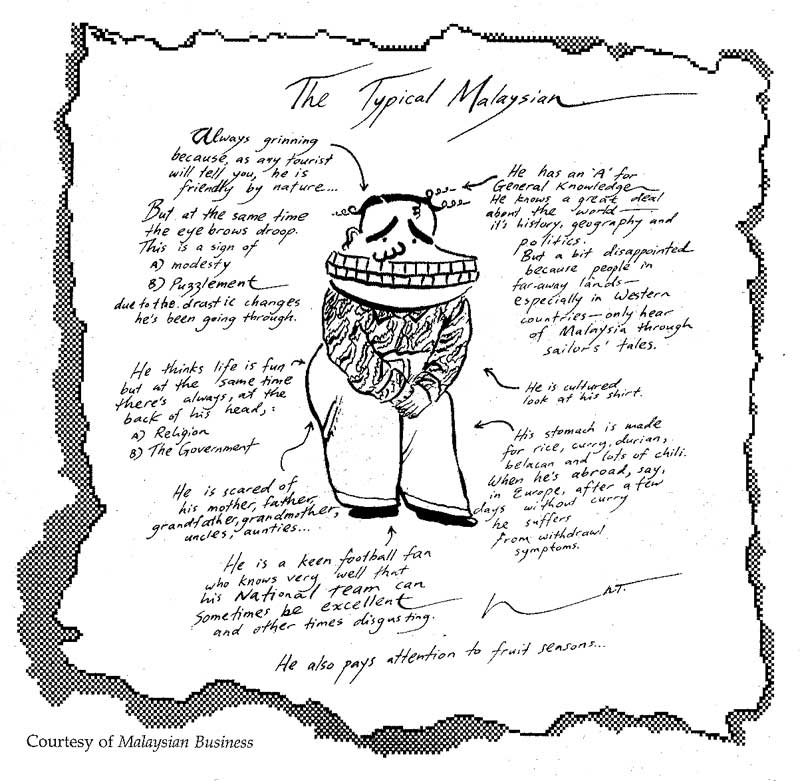

Research Direction:
2008
This PhD research project is looking at how visual metaphors/stereotype image and cultural symbols are used in newspaper and magazine advertisements; and comic, to find out its influences in conveying and creating belief in shaping the nation’s identity so that it can/in order to demonstrate the significant role of communication design in constructing the evolution of Malaysia National Identity from 1957 – 2007, 5o years of Independence.
This is my latest thought, until now this is what my research is about..
National Identity is a complex entity; a complexity that is manifest through such elements as ethnic groupings, language and cultural practices. This PhD project is investigating the ways in which communication design contributes to the communication and experience of national identity through a particular focus on Malaysia. Inevitably, through different mediums – digital or print – visual communication plays a significant influence in stimulating society’s culture and identity. Marketing and advertising both play an important part in perpetuating the construction of nation’s notion of it’s identity, by projecting an image of the country both to itself and the external world.
This PhD is exploring how the roles and contributions of graphic designers inform through the production of design artifacts (e.g comics, newspaper’s and magazine’s advertisements) a nation’s identity. This will be done through a specific focus on communication design’s contribution in shaping the construction of Malaysian identity between 1957 and 2007. This is the period of the first 50 years of Malaysia’s independence. Derived from practice-based research methodology, three main design projects have been undertaken to explore this hypothesis.
In this GRC, I will be presenting a case study of Lat, a Malaysian highly influential visual communicator and a national icon, to discuss about visual communicator’s role and it’s influences in relations to the construction of Malaysian identity.
This is one of the latest work I have done through my graphic design practices,
some of them are for my research purpose and some are for the client. Currently, I am also been teaching as a teacher in Cambridge International College in Melbourne in Graphic Design Pre-Press department.
Nurul Rahman can be reach through:
nurulrahman[at]hotmail.com
nurul.rahman[at]rmit.edu.au


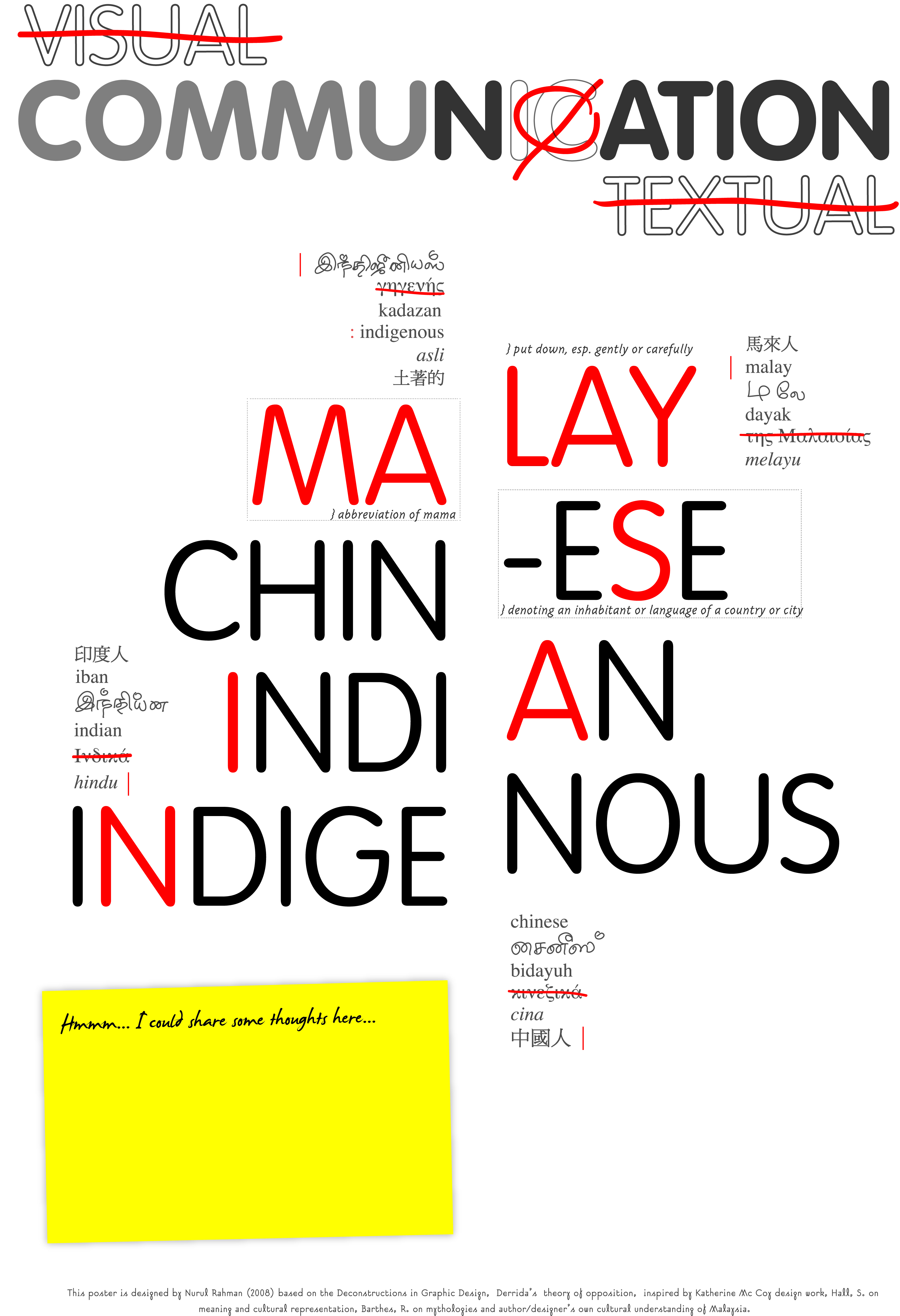
This is one of the latest work I have done through my graphic design practices,
some of them are for my research purpose and some are for the client. Currently,
I am also been teaching as a teacher in Cambridge International College in Melbourne in Graphic Design Pre-Press department.
Exploring how the notion of Malaysian national identity is constructed through popular print mediums (1957- 2007).
Abstract : Paper submitted for Universal Design, Hamamatsu, Japan
Stereotypical icons and graphic representations play significant roles in shaping the construction of a country’s identity. This paper attempts to place a preliminary groundwork in context, exploring the relationships between popular print mediums and the construction of the notion of Malaysian national identity through the design of stereotypical iconic images. It will present an overviews of three different case studies across the five decades spanning Malaysia as independent nation (1957-2007). The case studies are made up of a) the covers of WANITA (Malaysia’s women’s magazine), b) a collection of images by Malaysian cartoonist Lat and c) advertisements, gathered from national newspapers and magazines. The paper will discuss how Malaysian national identity is constructed in stereotypical icons and how the design of that identity is evident in populist, mass-culture oriented print mediums, unlike more elitist and officially sanctioned modes of cultural memory (such as national museums and achieves). It argues that the design in these print mediums serves as a ephemeral repository of cultural representation and images, and has a significant role in construction of Malaysian national identity that often has been overlooked.